It's hard to fully explain the Paint & Progress experience with a few sentences or photos. It's not just a painting class - it's a feeling, a process, and a space where people allow themselves to be creative without stress. So we invite you to take a look at what it really looks like one day at Paint & Progress studio.
Morning: the space awakens
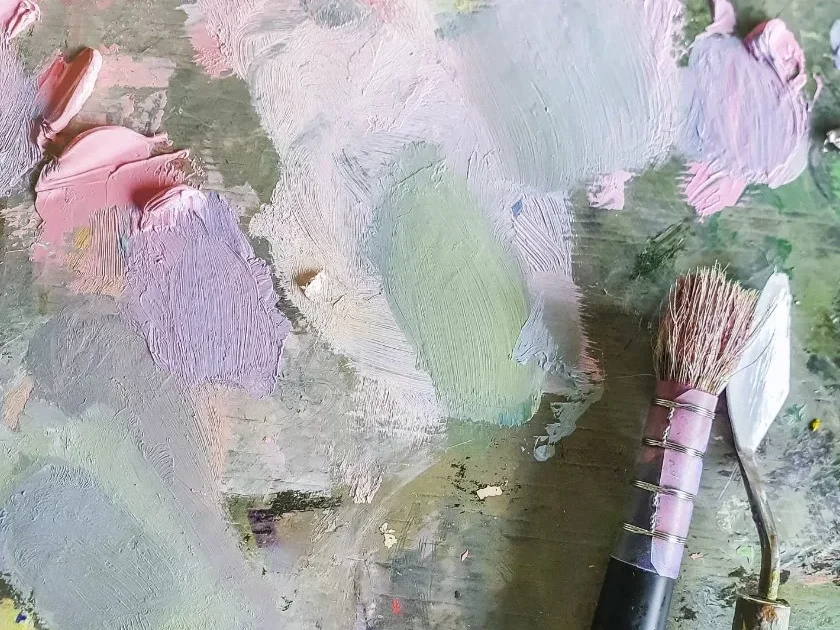
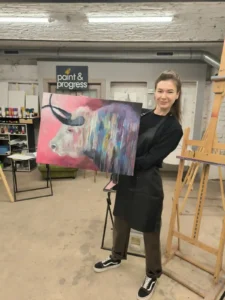
The day in the studio begins calmly. The room is still quiet, light gradually fills the walls, on which paintings from previous classes are visible. Easels are arranged, canvases, paints and brushes are laid out on tables. Each item is prepared with the idea that, upon entering the studio, the participant, you wouldn't have to worry about technical details, but only about the process.
This moment of preparation is important – it sets the mood for the day. In the Paint & Progress philosophy, the environment is not random: an organized space helps organize thoughts.
Before class: people and expectations
Before the class, participants start arriving at the studio. Some are nervous because they have never painted before. Others are returning for the third or fourth time. Conversations are quiet, relaxed – about the day, work, feelings.
We very often hear the phrase:
“I can't draw, but I want to try.”
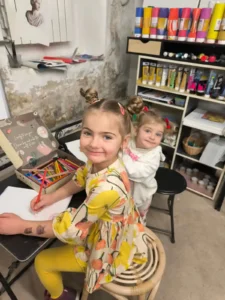
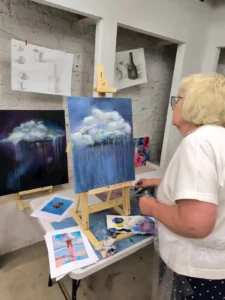
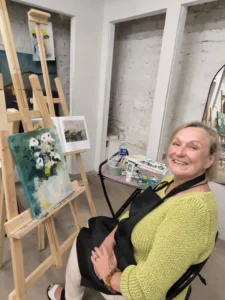
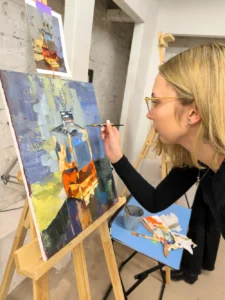
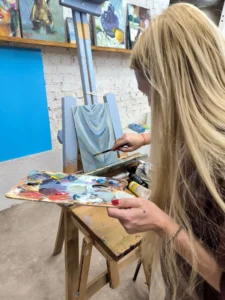
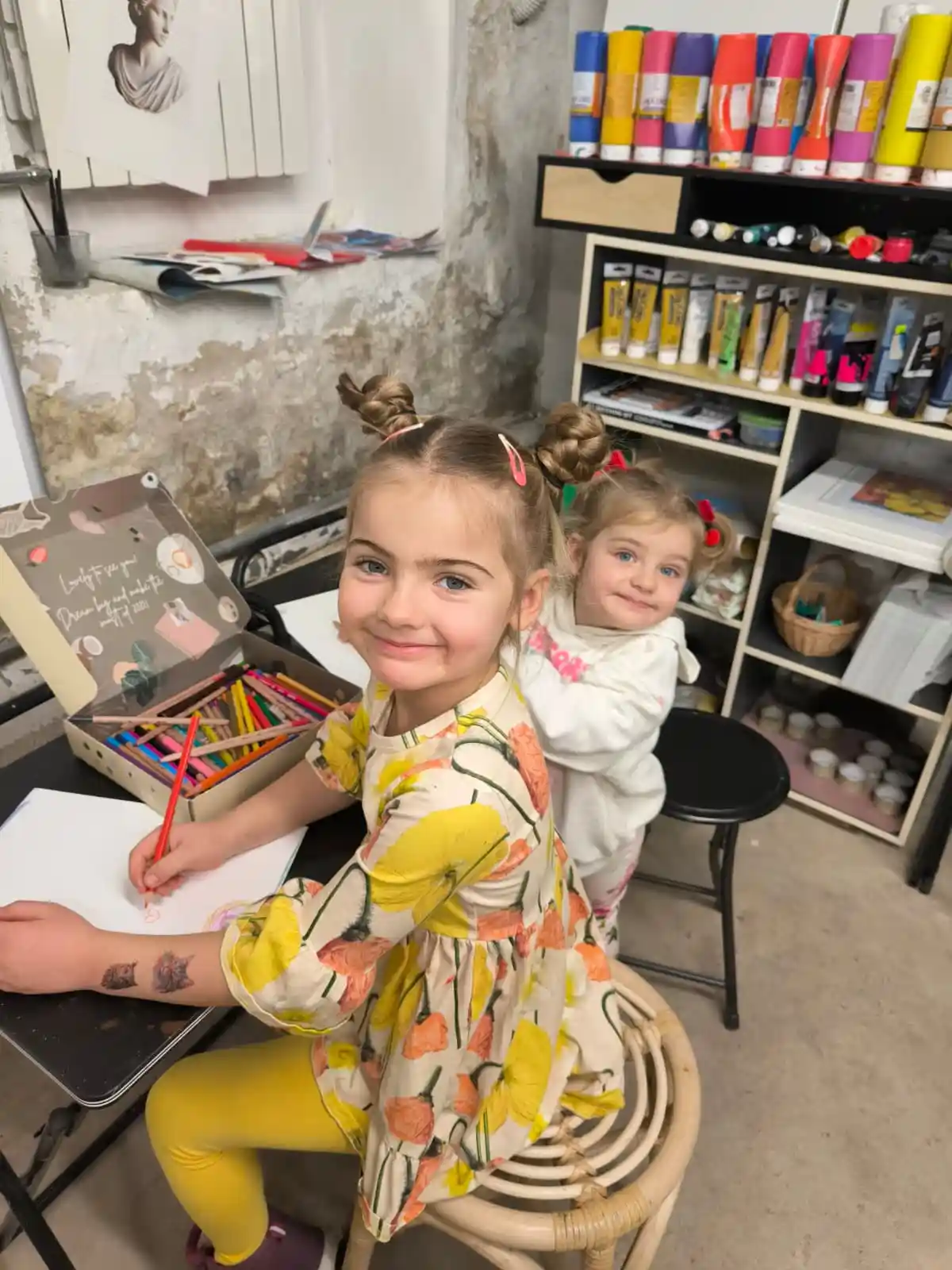
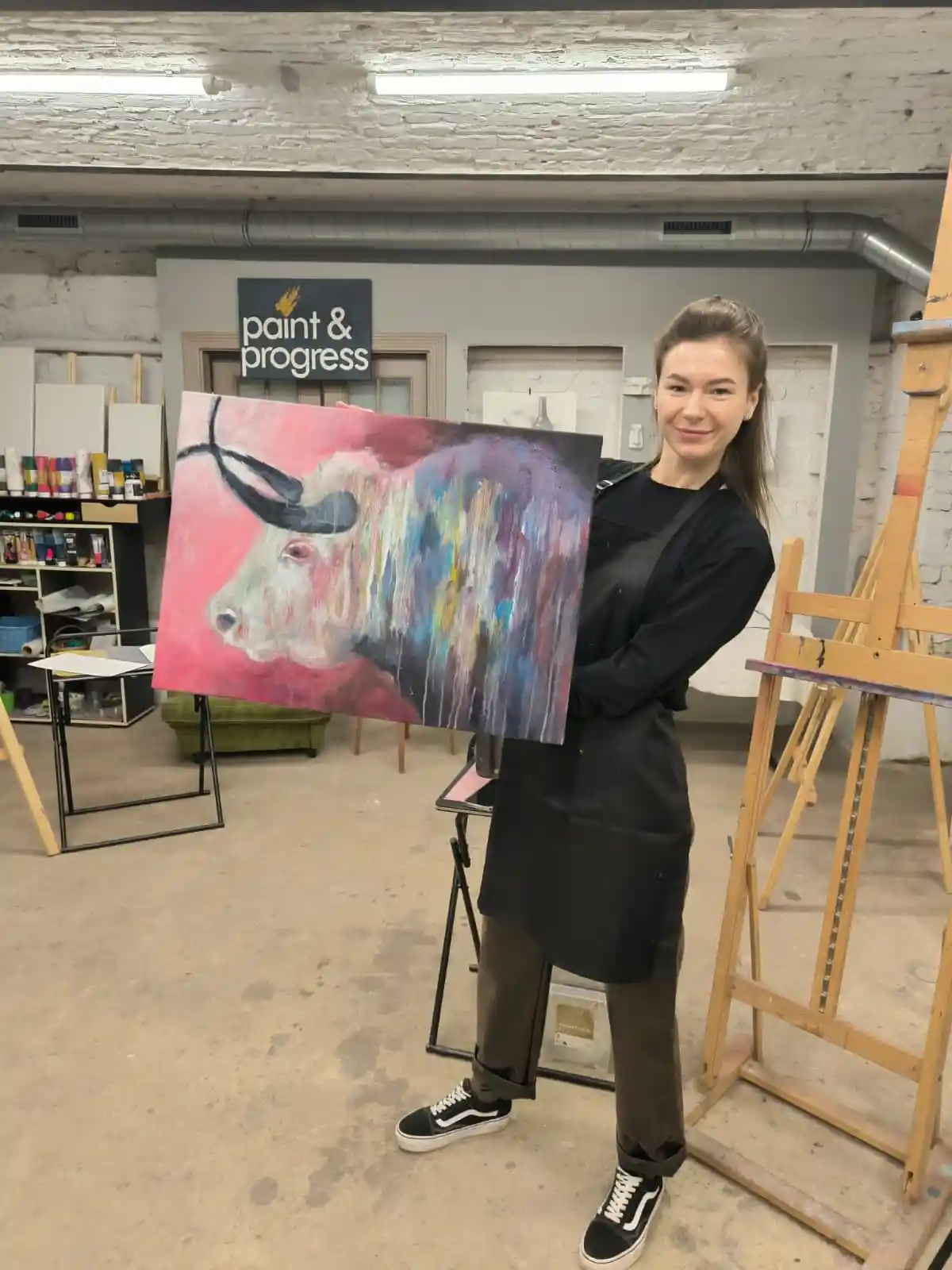
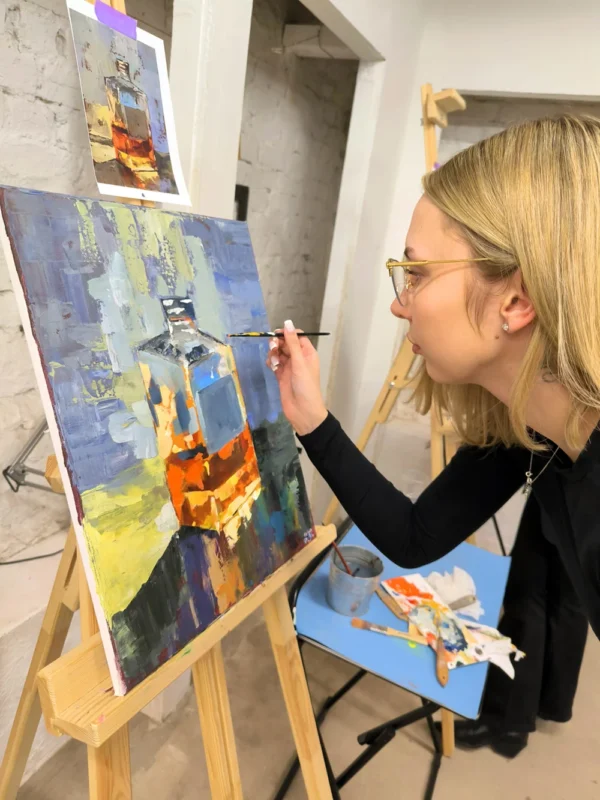
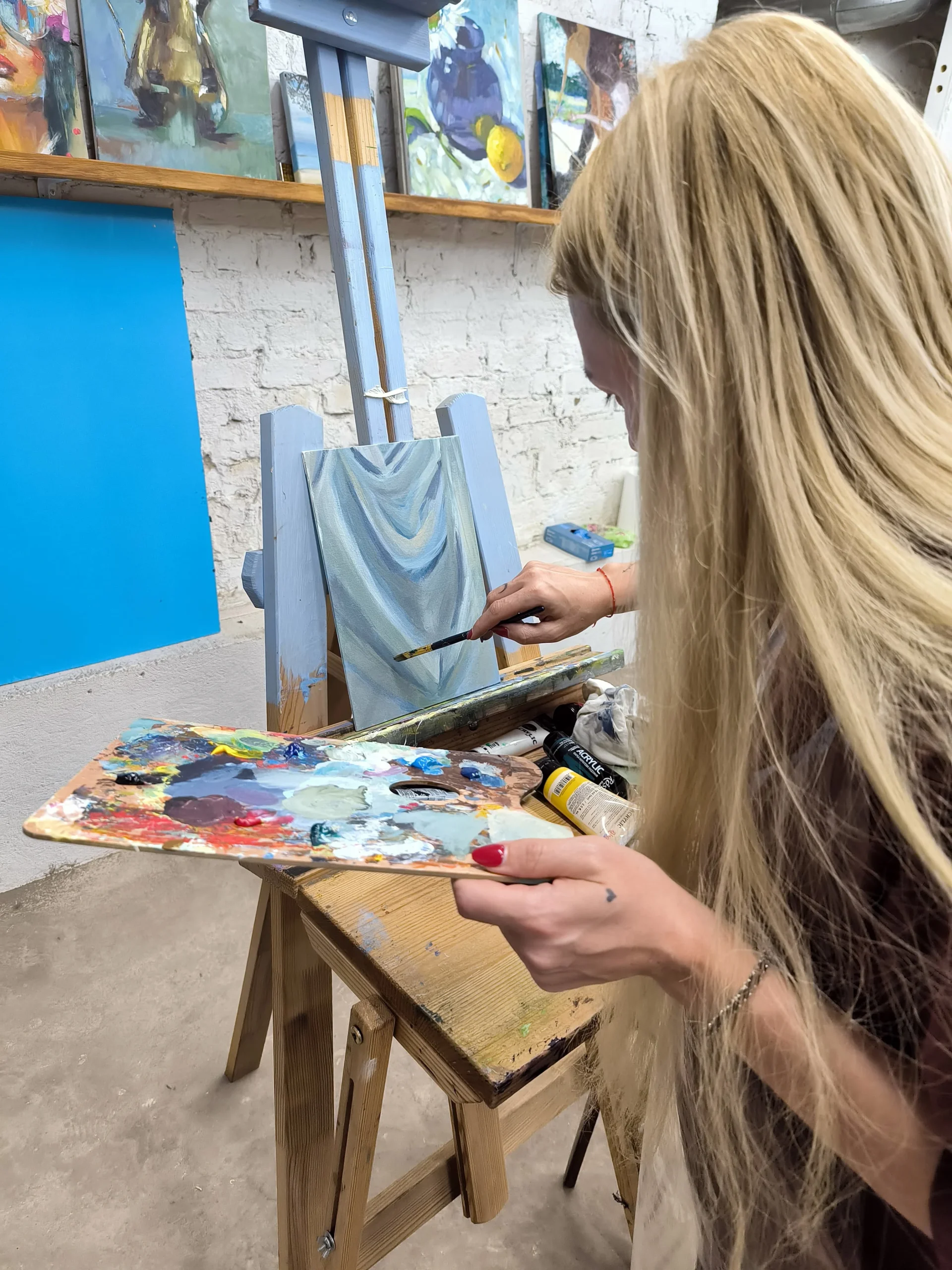
And this idea is the starting point of Paint & Progress – You don't have to be good at it, you can learn it here..
Beginning of the lesson: process, not result
When lesson begins, the rush disappears. The instructor introduces a topic, technique, or idea, but the emphasis is immediately placed: there is no right or wrong, no comparison.
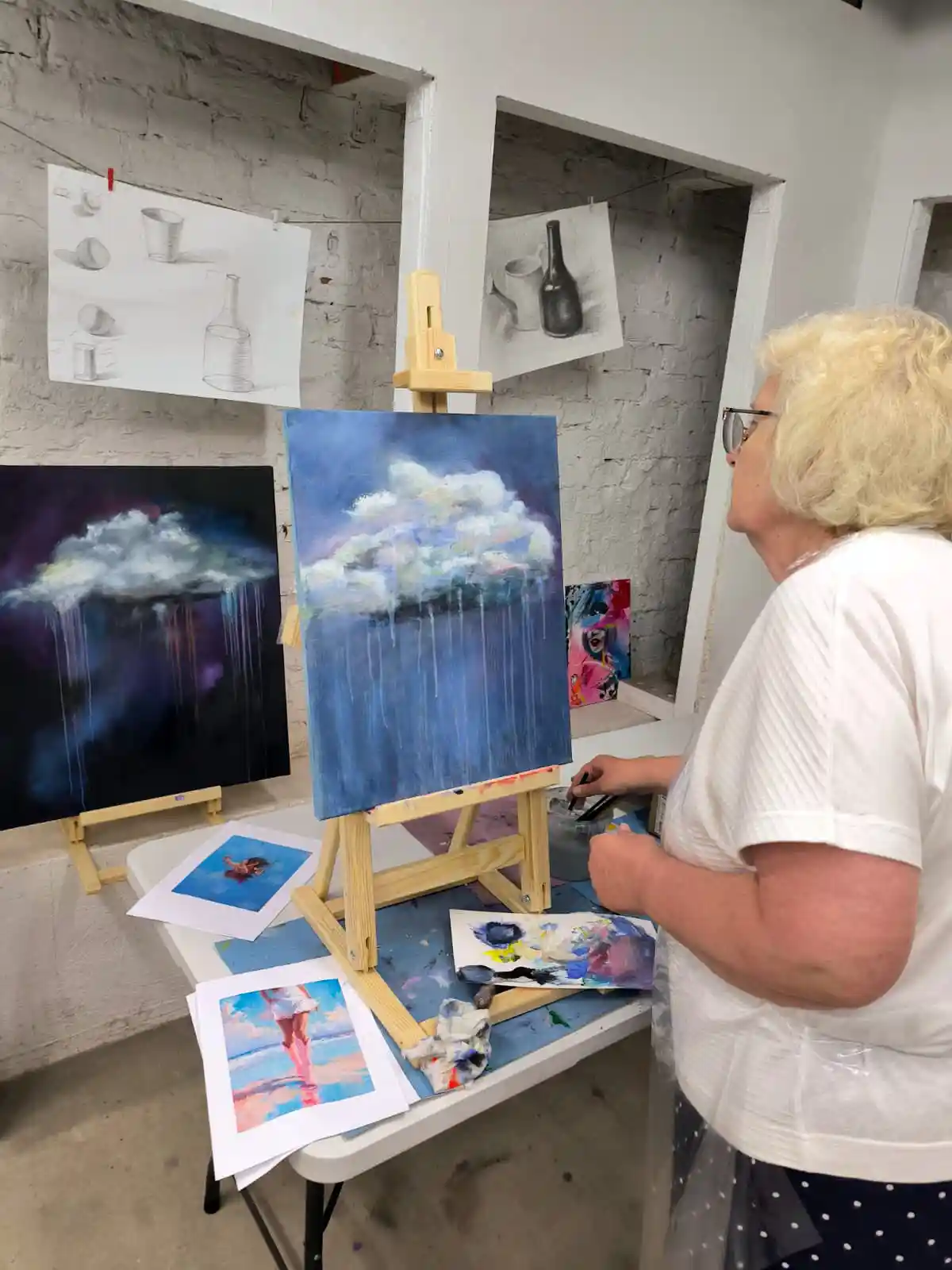
Participants begin to work at their own pace. Some follow the instructions carefully, others rely on intuition. The instructor approaches the group individually, helps, encourages, asks questions, and does not give ready-made answers.
In Paint & Progress classes, it is important to progress – not a perfect painting, but a step forward compared to yesterday.
Middle stage: silence, conversations and flow
Around the middle of the class, a special state of flow sets in. Someone works in silence, someone talks, someone laughs at an accidental brushstroke. There is no tension here about mistakes – they are perceived as part of the process.
Many participants recognize that this is the moment when the mind disconnects from everyday life. Phones are put aside, time slows down.
Conclusion of the lesson: not an assessment, but a reflection
At the end of the lesson, there are no grades or comparisons of work. If they wish, participants can share their feelings – what worked, what was difficult, what surprised them.
It is often found that:
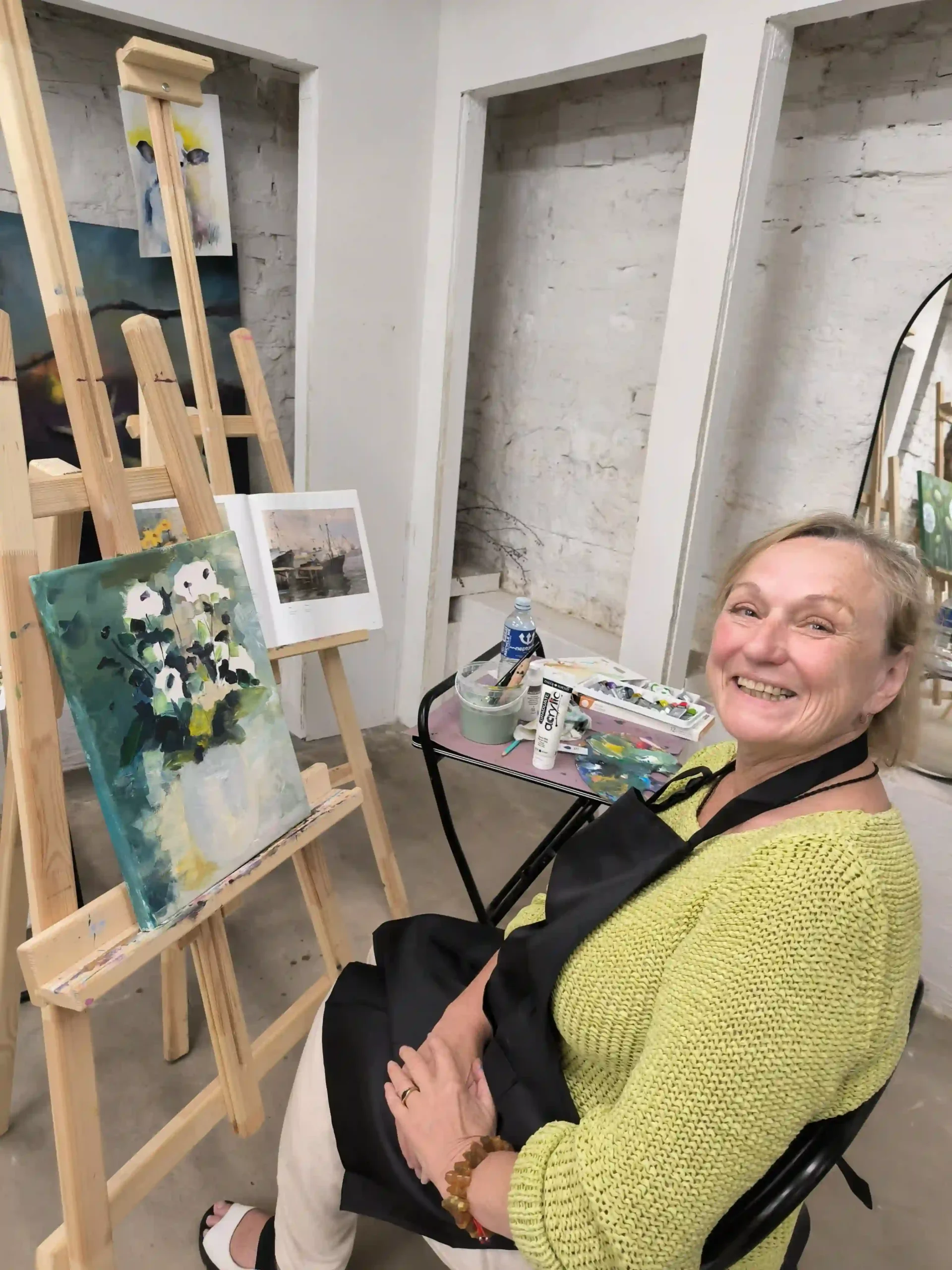
- a person who was skeptical at first has created work they are proud of;
- someone has discovered a new technique or color mixture;
- someone simply feels calmer than when they arrived.
And that is also the goal.
After class: the feeling that remains
When the room becomes quiet again, the paintings remain in the studio – each different, each with its own story. But the most important thing that remains is the feeling that the participants take with them.
Paint & Progress is not about quick results. It is a place where:
- I can be wrong,
- can learn at your own pace,
- may be in process.
Why do people come back?
Because one day at the Paint & Progress studio often becomes the beginning of something bigger – regular classes, a new hobby, or just time for yourself.
If you also feel like you want to try it, but are still hesitant – perhaps this is your day that hasn't even started yet.
Paint & Progress – a process in which art grows with people.